
This Event is licensed under the Creative Commons BY-SA license. This license allows reusers to distribute, remix, adapt, and build upon the material in any medium or format, so long as attribution is given to the creator. The license allows for commercial use. If you remix, adapt, or build upon the material, you must license the modified material under identical terms.
Key Event: 2294
Key Event Title
Plasma estradiol, increased
Short name
Exploration Options for Key Events
Click links below to explore KE 2294, Plasma estradiol, increased in tools offered by third parties.

Biological Context
| Level of Biological Organization |
|---|
| Cellular |
Cell term
Organ term
| Organ term |
|---|
| blood plasma |
Event Components
| Process | Object | Action |
|---|---|---|
| increased circulating estradiol level | 17beta-estradiol | increased |
Key Event Overview
AOPs Including This Key Event
| AOP Name | Role of event in AOP | Point of Contact | Author Status | OECD Status |
|---|---|---|---|---|
| Aromatase induction leading to estrogen receptor alpha activation via increased estradiol | KeyEvent | Martina Panzarea (send email) | Under development: Not open for comment. Do not cite | |
| Activation, ERα leads to persistent vaginal cornification via increased kisspeptin | KeyEvent | John Frisch (send email) | Under development: Not open for comment. Do not cite | |
| Activation, ERα leads to increased uterine weight via earlier proliferation of cells | KeyEvent | John Frisch (send email) | Under development: Not open for comment. Do not cite | |
| Activation, ERα leads to precocious puberty via increased kisspeptin | KeyEvent | John Frisch (send email) | Under development: Not open for comment. Do not cite | |
| Activation, ERα leads to decreased fertility via prolonged estrus cycle | KeyEvent | John Frisch (send email) | Under development: Not open for comment. Do not cite |
Taxonomic Applicability
| Term | Scientific Term | Evidence | Link |
|---|---|---|---|
| mammals | mammals | Moderate | NCBI |
Life Stages
| Life stage | Evidence |
|---|---|
| Adult, reproductively mature | Moderate |
| Juvenile | Moderate |
Sex Applicability
| Term | Evidence |
|---|---|
| Unspecific | High |
Key Event Description
Increased plasma estradiol (E2) levels are generally due to increased secretion from organs, but can also be caused by birth control pills or hormone replacement therapy. Estradiol is an 18-carbon steroid hormone (Zinn and Schell 2018). In females, ovaries are a major source of estradiol, with production of E2 by the ovaries well-established by the two-cell, two gonadotropin model of steroid biosynthesis (for review see Drummond 2006; Kimura et al. 2007; Palermo 2007; Beevors et al. 2024). Luteinizing hormone stimulates steroid production in theca cells, with follicle-stimulating hormone stimulates steroid production in granulosa cells.
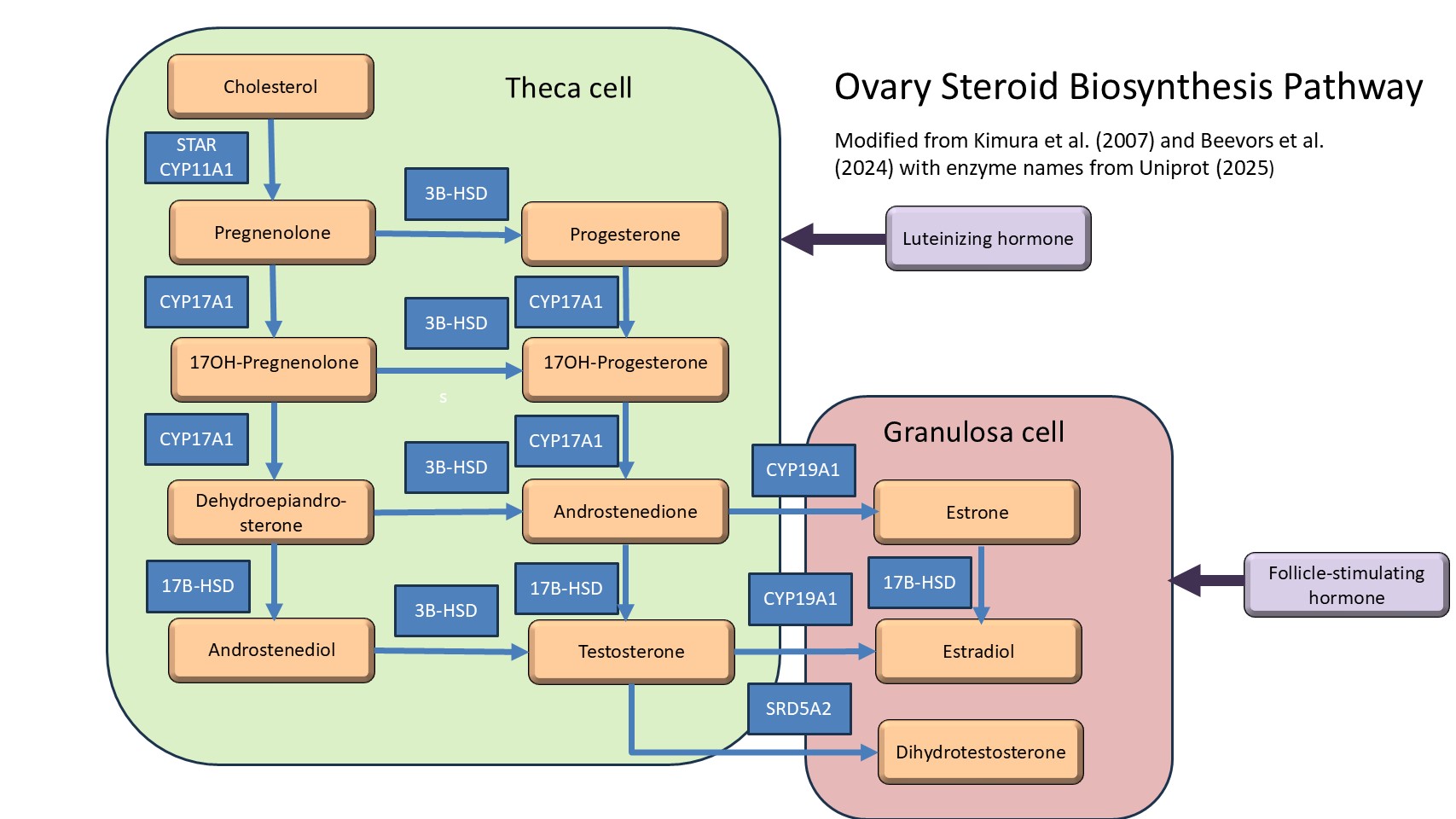
Table 1: List of steroid synthesis enzymes with identifier of enzyme (Uniprot, 2025).
|
Enzyme |
Identifier |
|
Steroidogenic acute regulatory protein, mitochondrial (STAR) |
|
|
Cholesterol side-chain cleavage enzyme, mitochondrial (CYP11A) |
EC:1.14.15.6 |
|
3 beta-hydroxysteroid dehydrogenase (3B-HSD) |
EC:1.1.1.145 |
|
Steroid 17-alpha-hydroxylase (CYP17A1) |
EC:1.14.14.19 |
|
17-beta-hydroxysteroid dehydrogenase (17B-HSD) |
EC:1.1.1.105 |
|
Aromatase (CYP19A1) |
EC:1.14.14.14 |
|
3-oxo-5-alpha-steroid 4-dehydrogenase 2 (SRD5A2) |
EC:1.3.1.22 |
How It Is Measured or Detected
Estradiol can be measured via immunoassay, mass spectrometry or Western blotting, with immunoassay the preferred technique (for review of techniques see Rosner et al. 2013). Studies that utilized immunoassay include (Sashida and Johnson 1976; Spears et al. 1998; Li et al. 2008; Murray et al. 2008; Gan et al. 2024), and include commercially available ELISA kits (e.g. Neogen 402110 (non-species specific); ALPCO 11-ESTHU-E01 (human); Cayman Chemical 501890 (non-species specific)). Mention of trade names or commercial products does not constitute endorsement or recommendation for use.
Domain of Applicability
Life Stage: Adult, reproductively mature, juveniles.
Sex: Applies to both males and females as both sexes require signalling for hormone pathways.
Taxonomic: Primarily studied in laboratory rodents and humans. Plausible for most mammals due to conserved hormone pathways regulating hypothalamus-pituitary-gonadal axis processes. Plasma estradiol widespread among vertebrates, including mammals (Bondesson et al. 2015), birds (Hanlon et al. 2022), fish (Li et al. 2019), reptiles (Cruz-Cano et al. 2023), and amphibians (Bondesson et al. 2015).
References
Beevors LI, Sundar S, Foster PA. 2024. Steroid metabolism and hormonal dynamics in normal and malignant ovaries. Essays in Biochemistry 68(4): 491-507.
Bondesson M, Hao R, Lin CY, Williams C, Gustafsson JA. 2015. Estrogen receptor signaling during vertebrate development. Biochimica et Biophysica Acta 1849(2): 142-151.
Cruz-Cano NB, Sanchez-Rivera UA, Alvarez-Rodriguez C, Cardenas-Leon M, Martinez-Torres M. 2023. Sex steroid receptors in the ovarian follicles of the lizard Sceloporus torquatus. Zygote. 31(4): 386-392.
Drummond AE. 2006. The role of steroids in follicular growth. Reproductive Biology and Endocrinology 4:16.
Hanlon C, Ziezold CJ, Bedecarrats GY. 2022. The Diverse Roles of 17β-Estradiol in Non-Gonadal Tissues and Its Consequential Impact on Reproduction in Laying and Broiler Breeder Hens. Frontiers in Physiology 13: 942790.
Kimura S, Matsumoto T, Matsuyama R, Shiina H, Sato T, Takeyama K, Kato S. 2007. Androgen receptor function in folliculogenesis and its clinical implication in premature ovarian failure. Trends in Endocrinology and Metabolism 18(5): 183-189.
Li M, Sun L, Wang D. 2019. Roles of estrogens in fish sexual plasticity and sex differentiation. General and Comparative Endocrinology 277: 9-16.
Murray AA, Swales AK, Smith RE, Molinek MD, Hillier SG, Spears N. 2008. Follicular growth and oocyte competence in the in vitro cultured mouse follicle: effects of gonadotrophins and steroids. MHR-Basic Science of Reproductive Medicine 14(2): 75-83.
Palermo R. 2007. Differential actions of FSH and LH during folliculogenesis. Reproductive BioMedicine Online 15(3): 326-337.
Rosner W, Hankinson SE, Sluss PM, Vesper HW, Wierman ME. 2013. Challenges to the measurement of estradiol: an endocrine society position statement. The Journal of Clinical Endocrinology and Metabolism. 98(4): 1376-1387.
Sashida T, Johnson DC. 1976. Stimulation of the estrogen synthesizing system of the immature rat ovary by exogenous and endogenous gonadotropins. Steroids 27(4): 469-79.
Spears N, Murray AA, Allison V, Boland NI, Gosden RG. 1998. Role of gonadotrophins and ovarian steroids in the development of mouse follicles in vitro. Journal of Reproduction and Fertility 113(1): 19-26.
The UniProt Consortium. UniProt: the Universal Protein Knowledgebase in 2025. https://www.uniprot.org/ (retrieved 2 November 2025).
Zinn S, Schnell M. 2018. Flexibility at the Fringes: Conformations of the Steroid Hormone β-Estradiol. ChemPhysChem 19(21): 2915-2920.
NOTE: Italics indicate edits from John Frisch January 2026. A full list of updates can be found in the Change Log on the View History page.